

Introduction
Investing can feel confusing and even risky when you are just starting. Many beginners think investing is only for rich people or financial experts. In reality, anyone can learn how to invest with the right guidance and mindset. This investment guide for beginners is written to help you understand investing in a clear and simple way. You do not need advanced math skills or deep financial knowledge to begin. You only need patience, discipline, and the willingness to learn.
In today’s world, saving money alone is not enough. Inflation slowly reduces the value of cash over time. That is why learning investing basics is so important. Investing allows your money to grow and work for you while you focus on your daily life and career. Even small investments, when made regularly, can turn into meaningful wealth over the long term.
This guide is designed for beginners and intermediate readers who want practical and honest advice. You will learn what investing really means, why it matters, and how to start step by step. You will also discover beginner investment tips, common mistakes to avoid, and expert insights that can help you invest with confidence. By the end of this investment guide for beginners, you will have a clear roadmap to start your investing journey with clarity and control.
Table of Contents
What is Investment Guide for Beginners?
An investment guide for beginners is a simple roadmap that explains how new investors can put their money into different assets to grow wealth over time. It focuses on explaining concepts in plain language without complex financial terms. The goal is to help beginners make informed decisions instead of emotional or risky ones.
Investing means using your money to buy assets such as stocks, bonds, mutual funds, or real estate. These assets have the potential to increase in value or generate income. Unlike saving, investing involves some level of risk. However, with smart investing strategies and proper planning, risks can be managed.
This type of guide covers investing basics, including risk management, diversification, time horizon, and goal setting. It also helps beginners understand how markets work and why long-term thinking matters. Most importantly, an investment guide for beginners teaches patience and consistency, which are key factors in successful investing.
Why is Investment Guide for Beginners Important?
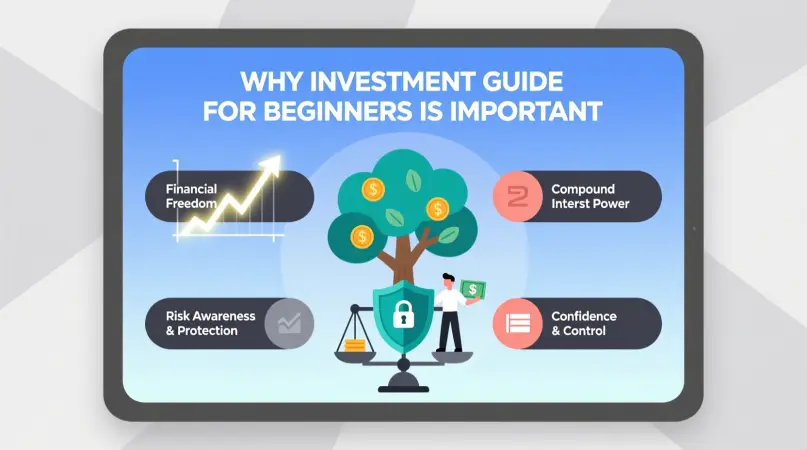
Many people lose money because they invest without proper knowledge. They follow trends, listen to rumors, or expect quick profits. An investment guide for beginners helps prevent these costly mistakes by building a strong foundation.
Here is why such a guide is important:
First, it builds confidence. When you understand how investing works, fear and confusion decrease. Second, it teaches smart investing habits early. Good habits formed at the beginning can last a lifetime. Third, it helps you set realistic expectations. Investing is not a shortcut to wealth, but a long-term process.
Additionally, this guide helps beginners align investments with personal goals. Whether you want to buy a home, fund education, or retire comfortably, investing becomes more meaningful with clear goals. Overall, an investment guide for beginners acts as a safety net that protects you from poor decisions and unnecessary losses.
May be you like it:
Movie Reviews Online: A Complete Guide for Beginners and Learners
Personal Finance Tips: A Practical Guide to Smart Money Management
Productivity Hacks 2025: A Practical Guide to Getting More Done
Detailed Step-by-Step Guide
Step 1: Understand Your Financial Situation
Before investing, review your income, expenses, and savings. Make sure you have an emergency fund that covers at least three to six months of expenses. Investing without financial stability can lead to stress and forced withdrawals.
Step 2: Set Clear Investment Goals
Define why you want to invest. Your goals may be short-term, medium-term, or long-term. Clear goals help you choose the right investment options and risk level.
Step 3: Learn Investing Basics
Understanding basic terms like risk, return, diversification, and compounding is essential. These concepts form the foundation of smart investing and help you evaluate opportunities wisely.
Step 4: Choose the Right Investment Type
Beginners should start with simple and diversified options such as mutual funds or index funds. These reduce risk by spreading money across multiple assets.
Step 5: Decide How Much to Invest
Start small and invest regularly. Consistent investing builds discipline and reduces the impact of market ups and downs. Avoid investing money you may need soon.
Step 6: Open an Investment Account
Choose a reliable investment platform or broker. Make sure it offers low fees, transparency, and easy access to your investments.
Step 7: Monitor and Review Periodically
Review your investments once or twice a year. Avoid checking daily, as short-term market movements can cause unnecessary anxiety.
Benefits of Investment Guide for Beginners
- Builds strong financial knowledge
- Encourages disciplined investing habits
- Helps manage risk effectively
- Promotes long-term wealth creation
- Reduces emotional decision-making
- Supports goal-based investing
Disadvantages / Risks
- Market fluctuations can cause short-term losses
- Requires patience and consistency
- Poor decisions can lead to financial loss
- Emotional reactions may affect outcomes
- Lack of knowledge increases risk
Common Mistakes to Avoid
One common mistake is trying to get rich quickly. Investing requires time and patience. Another mistake is not diversifying investments. Putting all money into one asset increases risk. Beginners also often ignore fees, which can reduce long-term returns.
Emotional investing is another major issue. Fear and greed can lead to poor timing decisions. Finally, many beginners fail to educate themselves continuously. Markets change, and learning should never stop.
May be you like it:
Entrepreneurship Ideas: Practical Ways to Start and Grow Successfully
Stock Market Updates: A Complete Guide for Beginners and Growing Investors
Business News 2025: Trends, Growth, and Future Insights
FAQs
What is the best investment for beginners?
The best investment for beginners is usually diversified funds such as index funds or mutual funds. They offer lower risk and steady growth.
How much money do I need to start investing?
You can start investing with a small amount. Many platforms allow investments with minimal capital.
Is investing risky for beginners?
All investing involves risk, but proper education and diversification reduce it significantly.
How long should I stay invested?
Long-term investing is generally more effective. Staying invested for years allows compounding to work.
Can beginners invest without expert help?
Yes, with the right investment guide for beginners, many people invest successfully on their own.
How often should I review my investments?
Reviewing once or twice a year is usually enough for long-term investors.
Expert Tips & Bonus Points
Start early, even with small amounts. Time is one of the most powerful tools in investing. Keep learning and stay updated on investing basics. Avoid comparing your progress with others. Everyone’s financial journey is different.
Stick to a simple strategy and avoid frequent changes. Simplicity often leads to better results. Finally, always invest with a long-term mindset and stay calm during market fluctuations.
Conclusion
Investing does not have to be complicated or intimidating. With the right knowledge and approach, anyone can become a confident investor. This investment guide for beginners has explained the core concepts, steps, benefits, and risks in a clear and practical way. By understanding investing basics and following beginner investment tips, you can make informed decisions that support your financial goals.
The key to successful investing is patience, discipline, and consistency. Markets will rise and fall, but long-term investors who stay focused often benefit the most. Avoid emotional decisions, keep learning, and review your strategy occasionally. Remember, investing is a journey, not a race.
As you move forward, start small, stay committed, and trust the process. With time, your confidence and knowledge will grow along with your investments. This investment guide for beginners is your starting point toward building a secure and financially independent future.
May be you like it:
Latest Movie Releases: Complete Guide for Movie Lovers